Parametric Ceiling
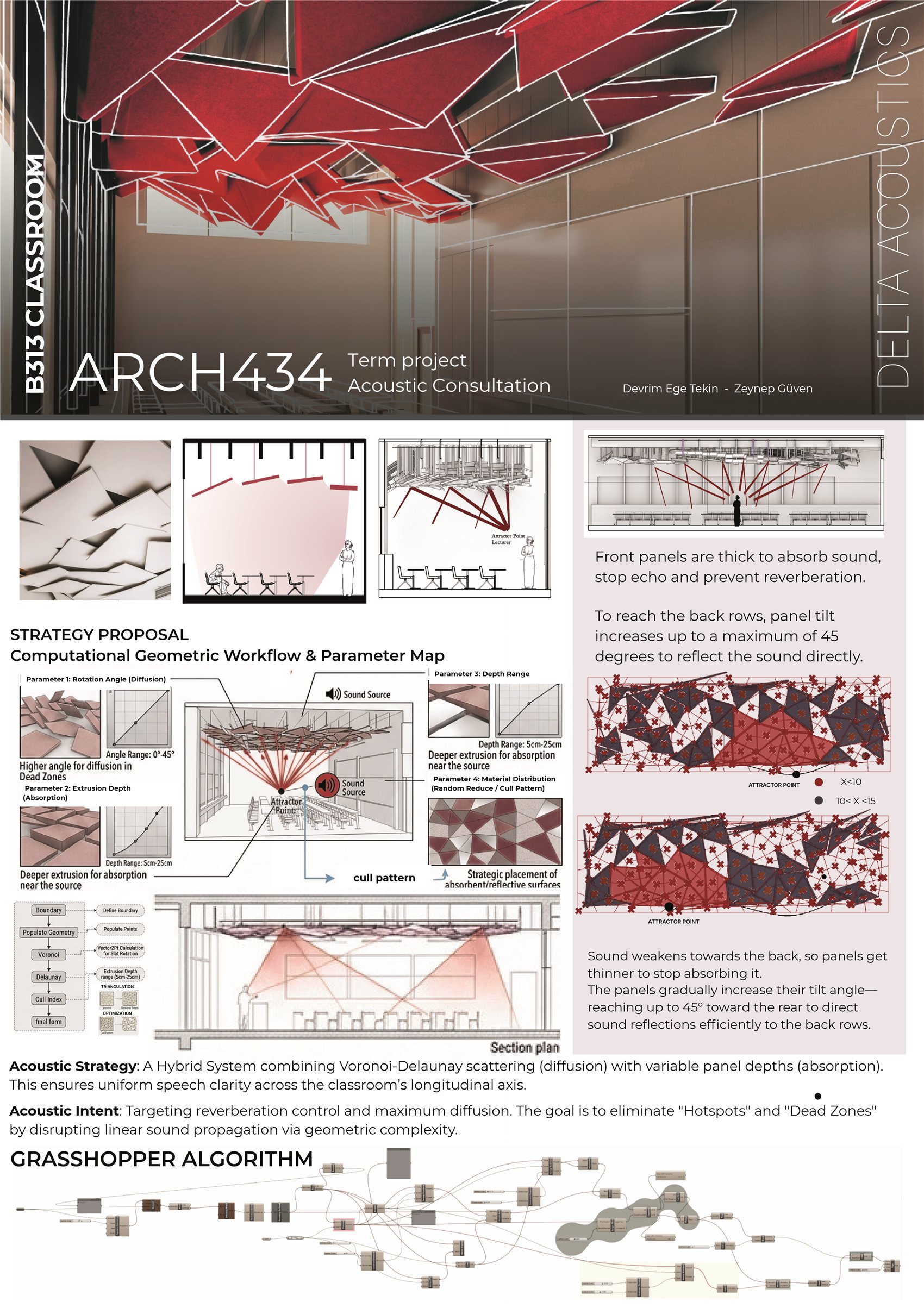
Acoustic consultation for the B313 classroom · ARCH434 term project
- MekanB313 Classroom
- DersARCH434 · Term project · Acoustic consultation
- EkipDelta Acoustics · Devrim Ege Tekin, Zeynep Güven
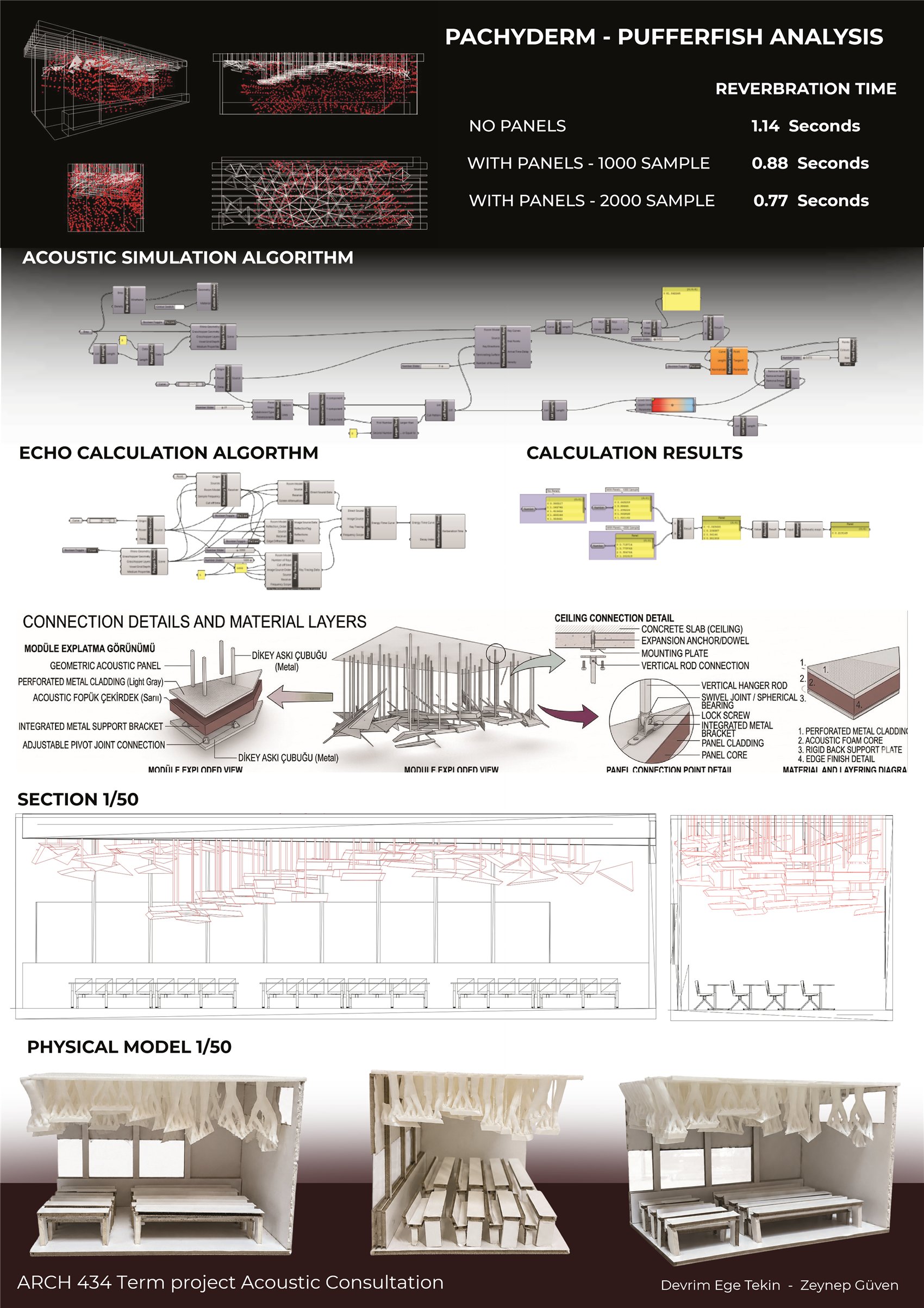
- SonuçReverberation time 1.14 s → 0.77 s
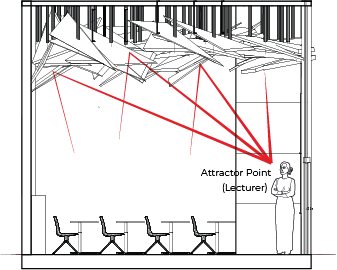
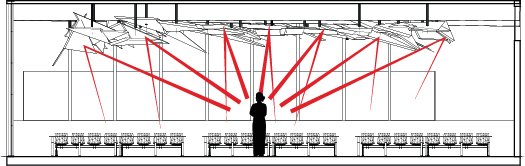
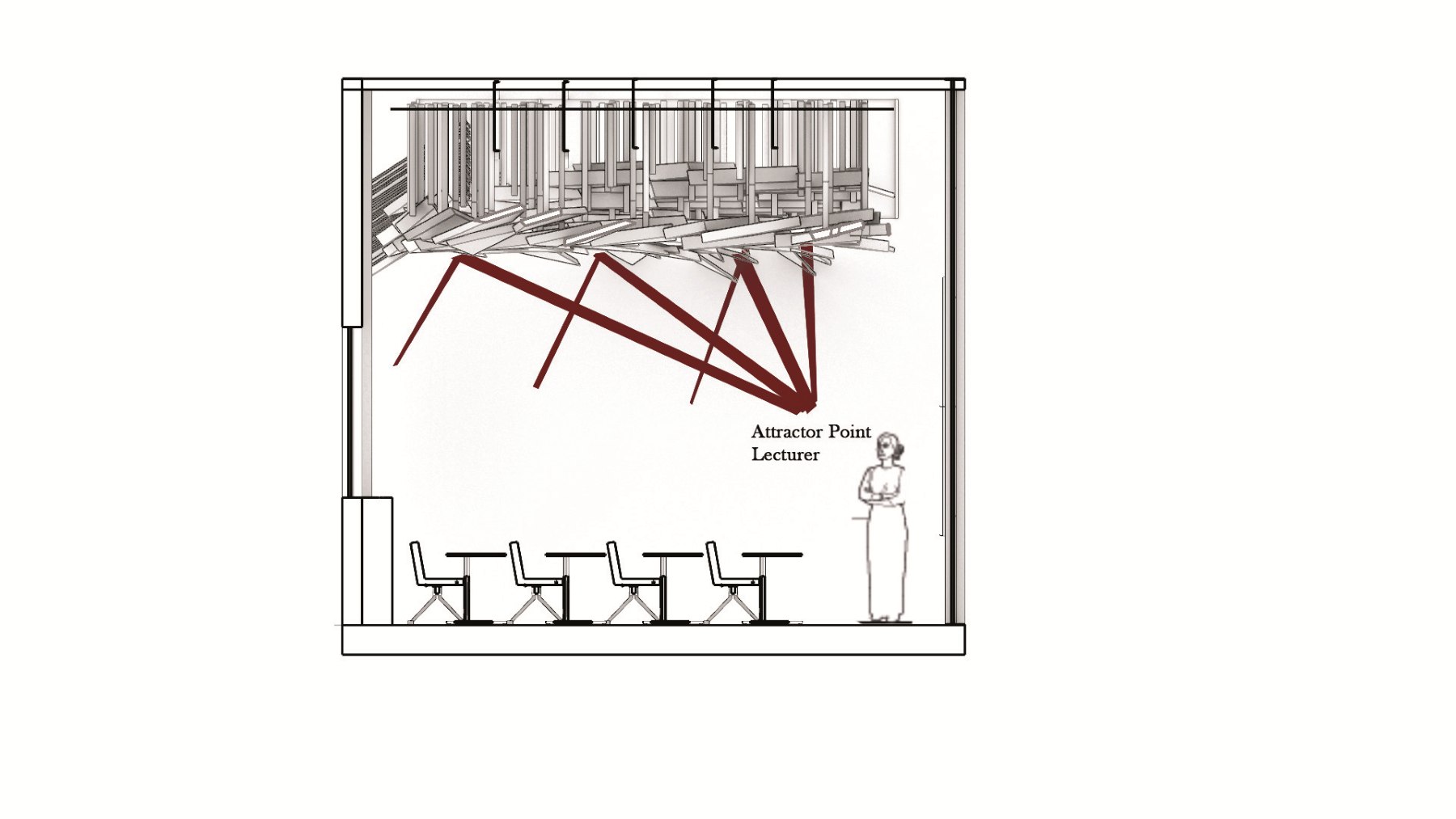
B313 is a linear, elongated classroom with a strong longitudinal axis. Seating is arranged in parallel rows facing a single focal point, the lecturer, which creates slap echo, excessive reverberation and uncontrolled sound propagation from front to back.
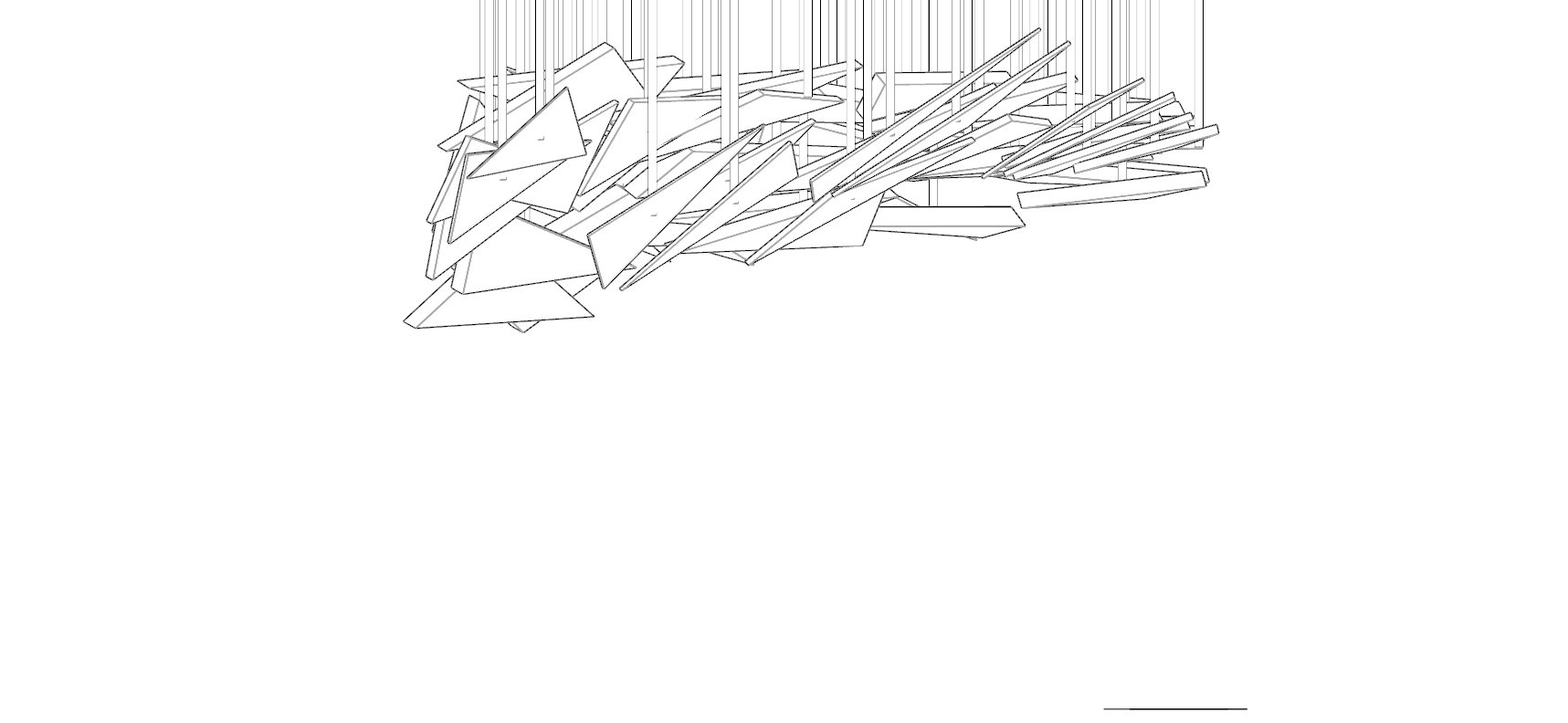
The project answers this with a parametric ceiling: a hybrid system combining Voronoi–Delaunay scattering for diffusion with variable panel depths for absorption, aiming for uniform speech clarity across the room.
How sound moves in a linear room
Long parallel walls bounce sound back and forth, hard materials keep it reverberating, and the linear geometry carries speech uncontrollably to the back. The result is acoustic hotspots near the lecturer and dead zones at the rear.
From points to a responsive surface
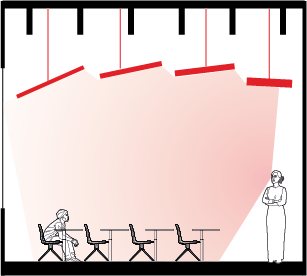
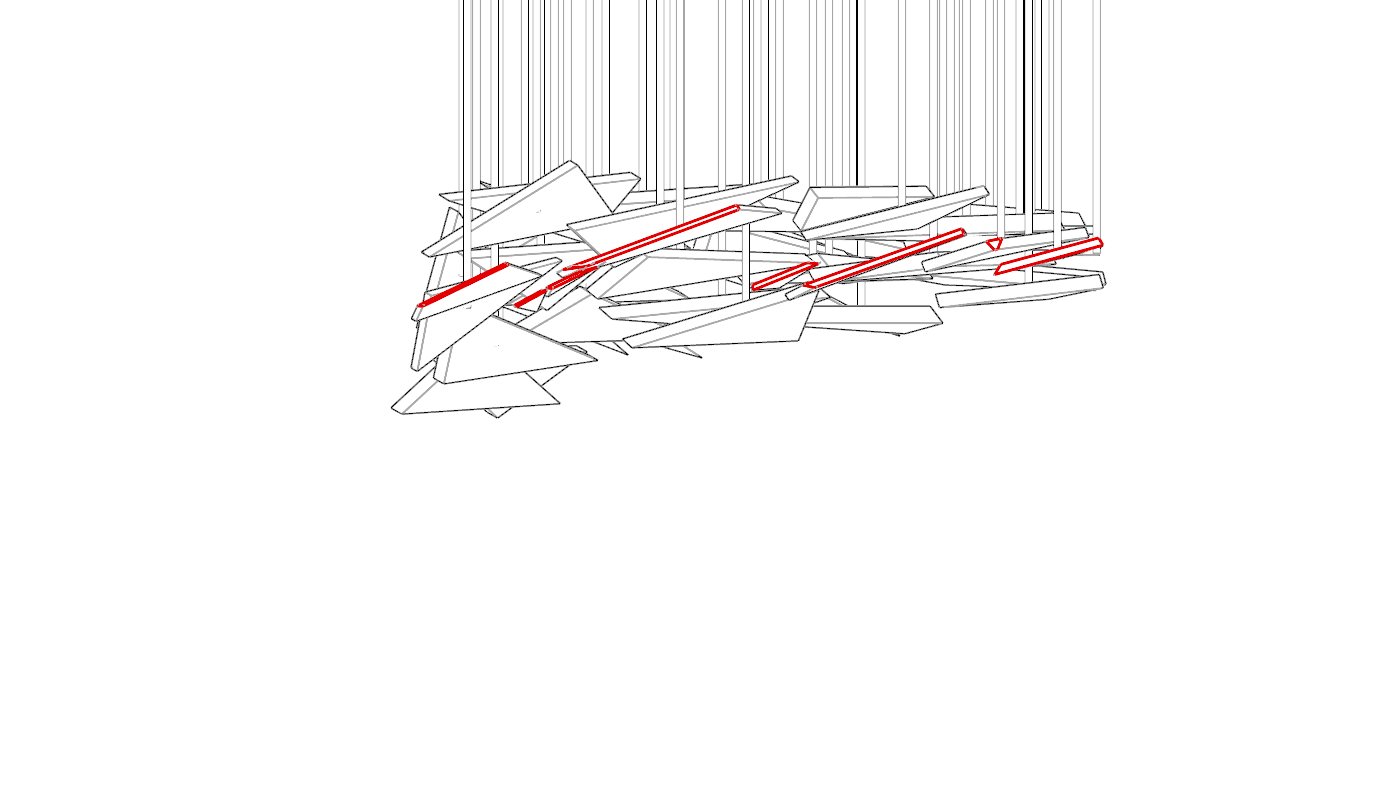
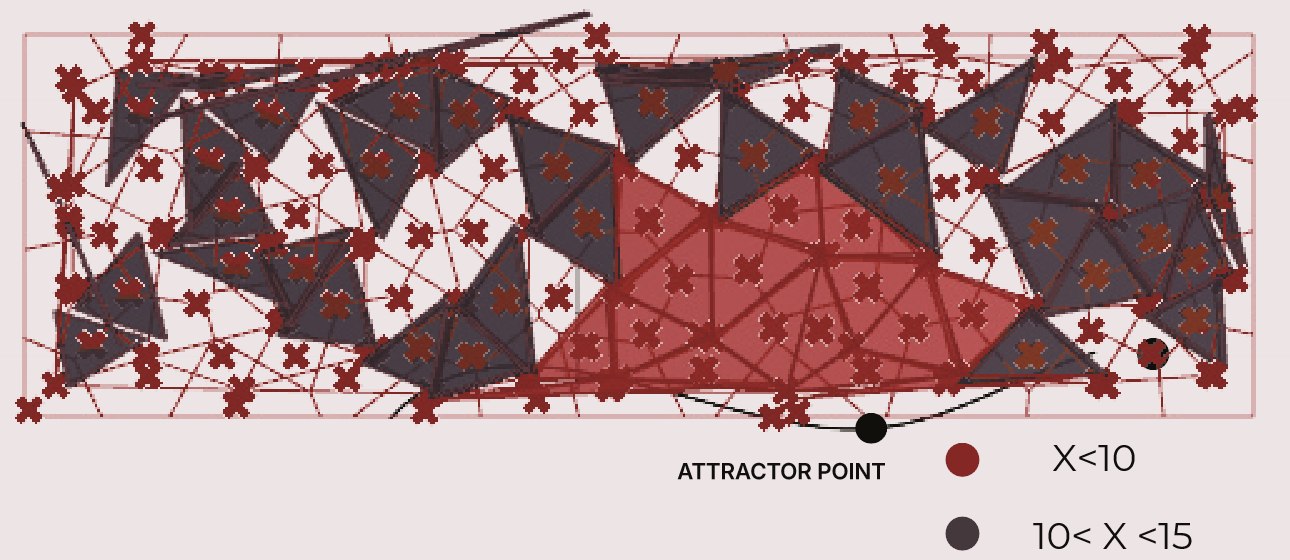
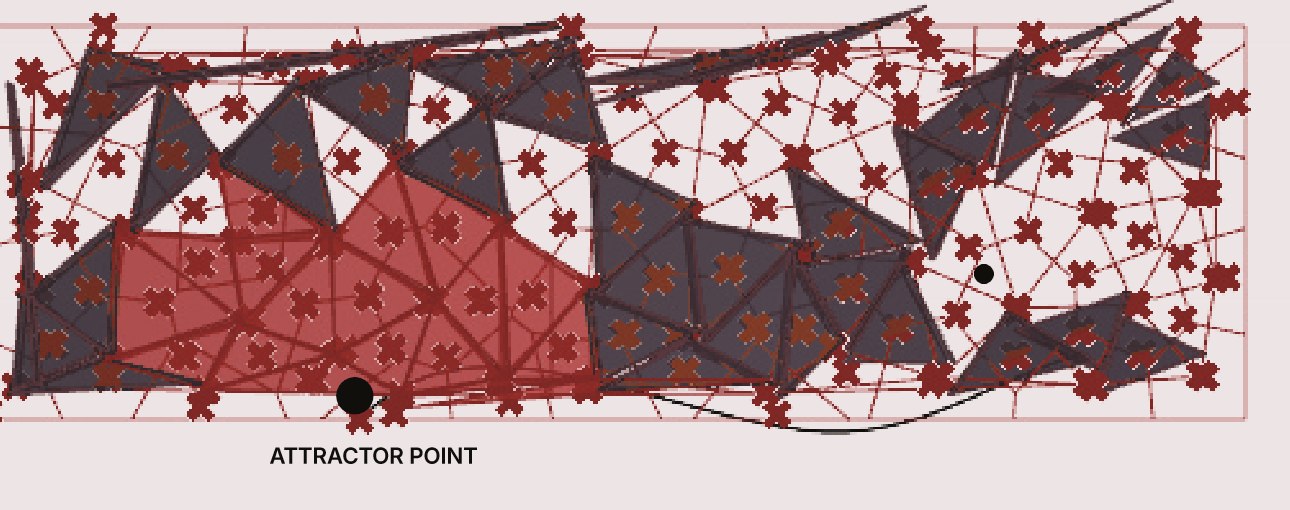
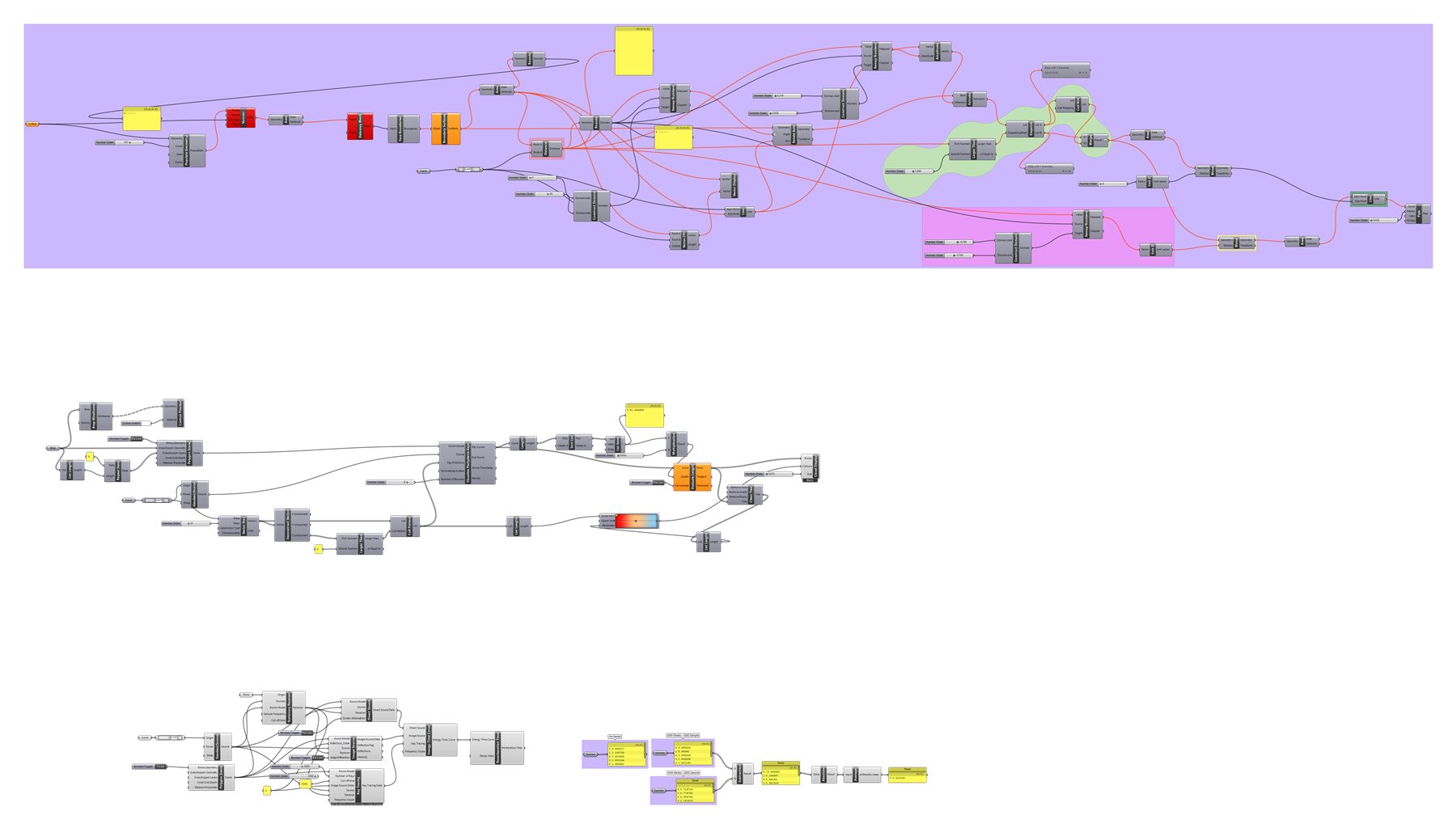
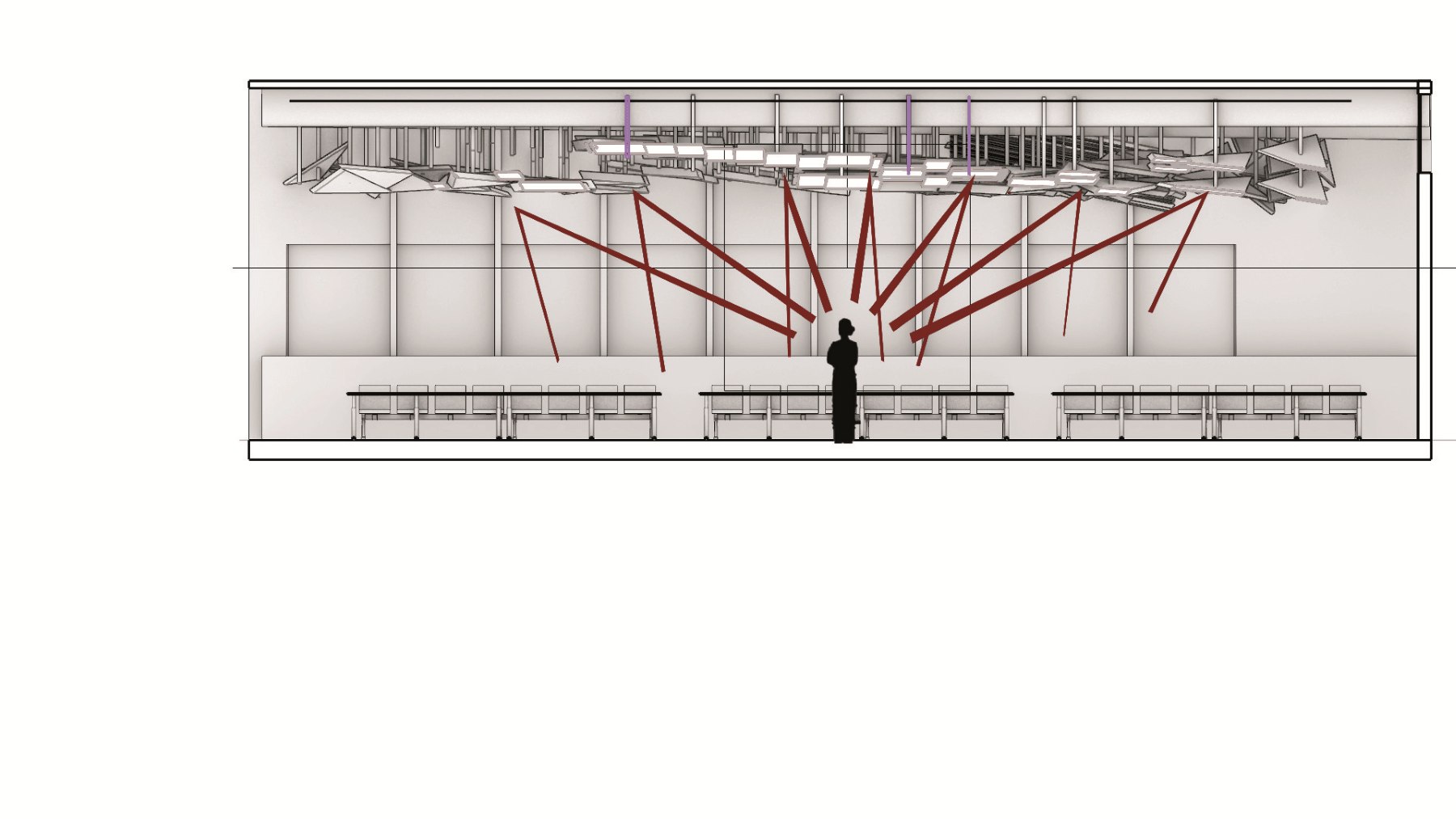
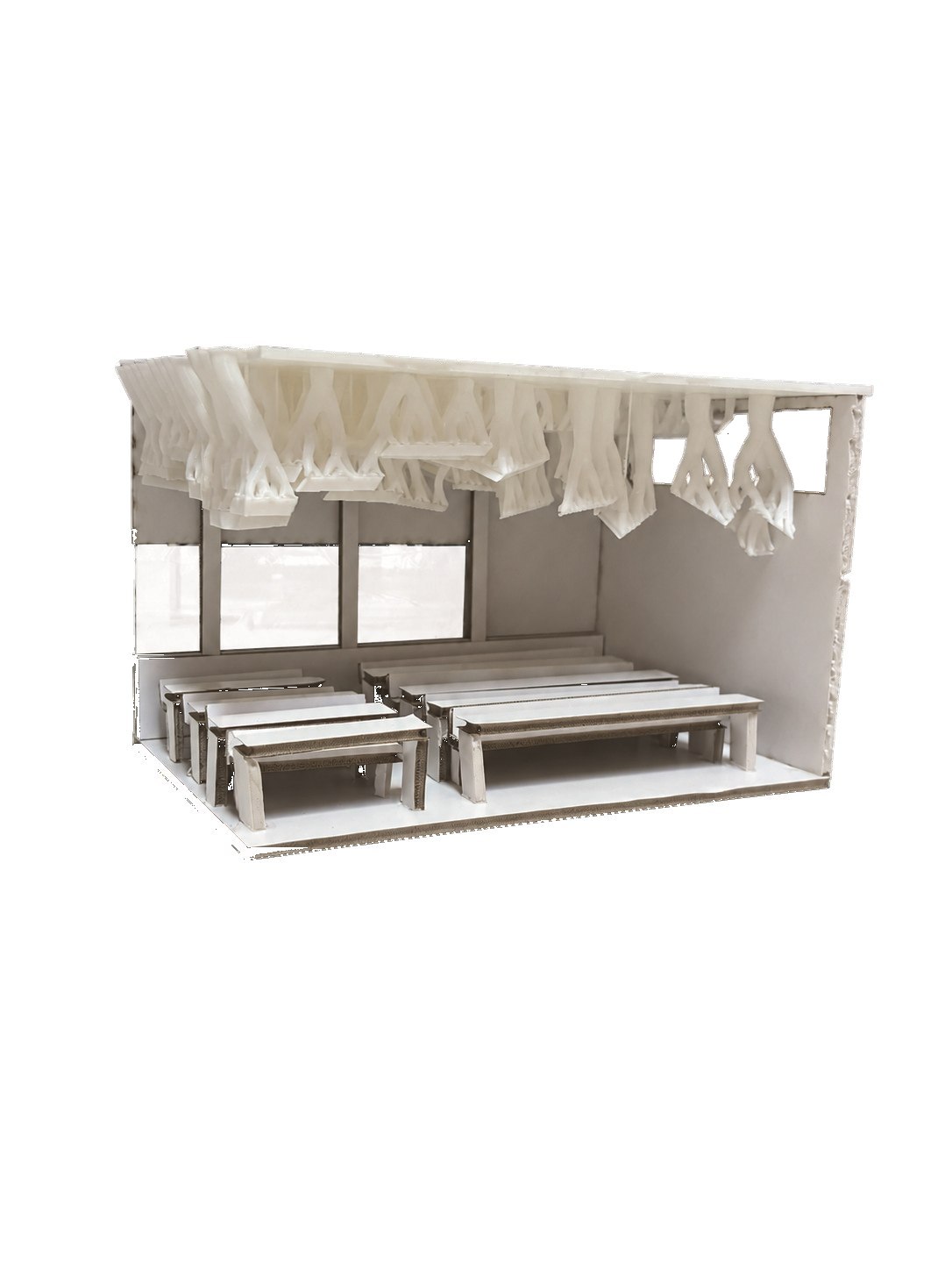
The inputs are the ceiling boundary, the lecturer's position as an attractor and a point cloud. Points become Voronoi cells, then a triangulated Delaunay network. Front panels are thick to absorb sound and stop echo; towards the back, where sound weakens, panels get thinner and tilt up to 45° to reflect sound directly to the back rows. A cull pattern places absorbent and reflective panels by their distance to the attractor.
Measuring the result
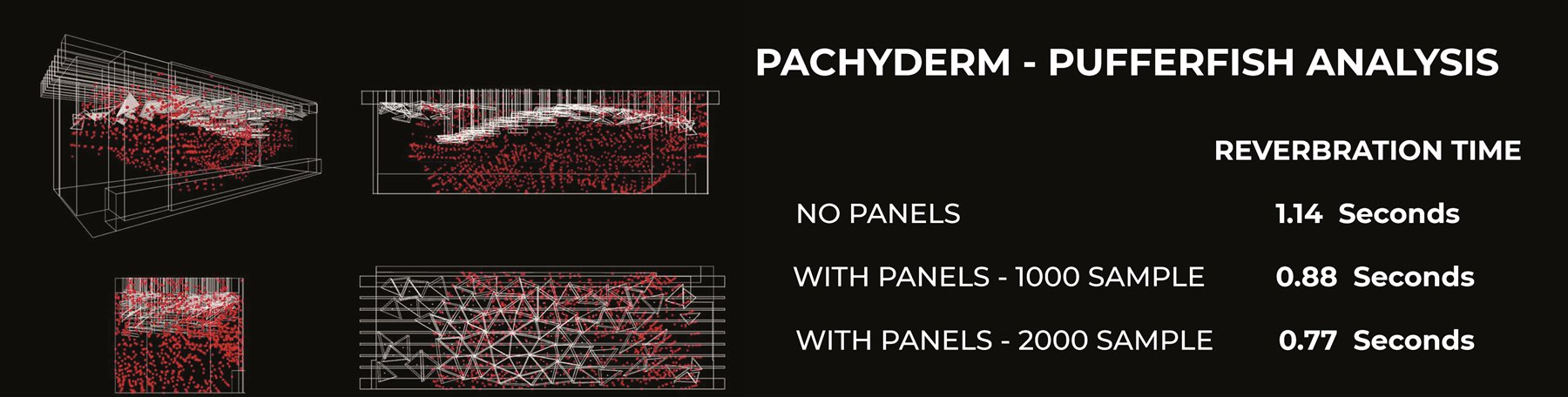
The ceiling was tested with Pachyderm acoustic simulation in Grasshopper. Reverberation time dropped from 1.14 s with no panels to 0.88 s with 1000 samples and 0.77 s with 2000 samples.
The ceiling in the classroom
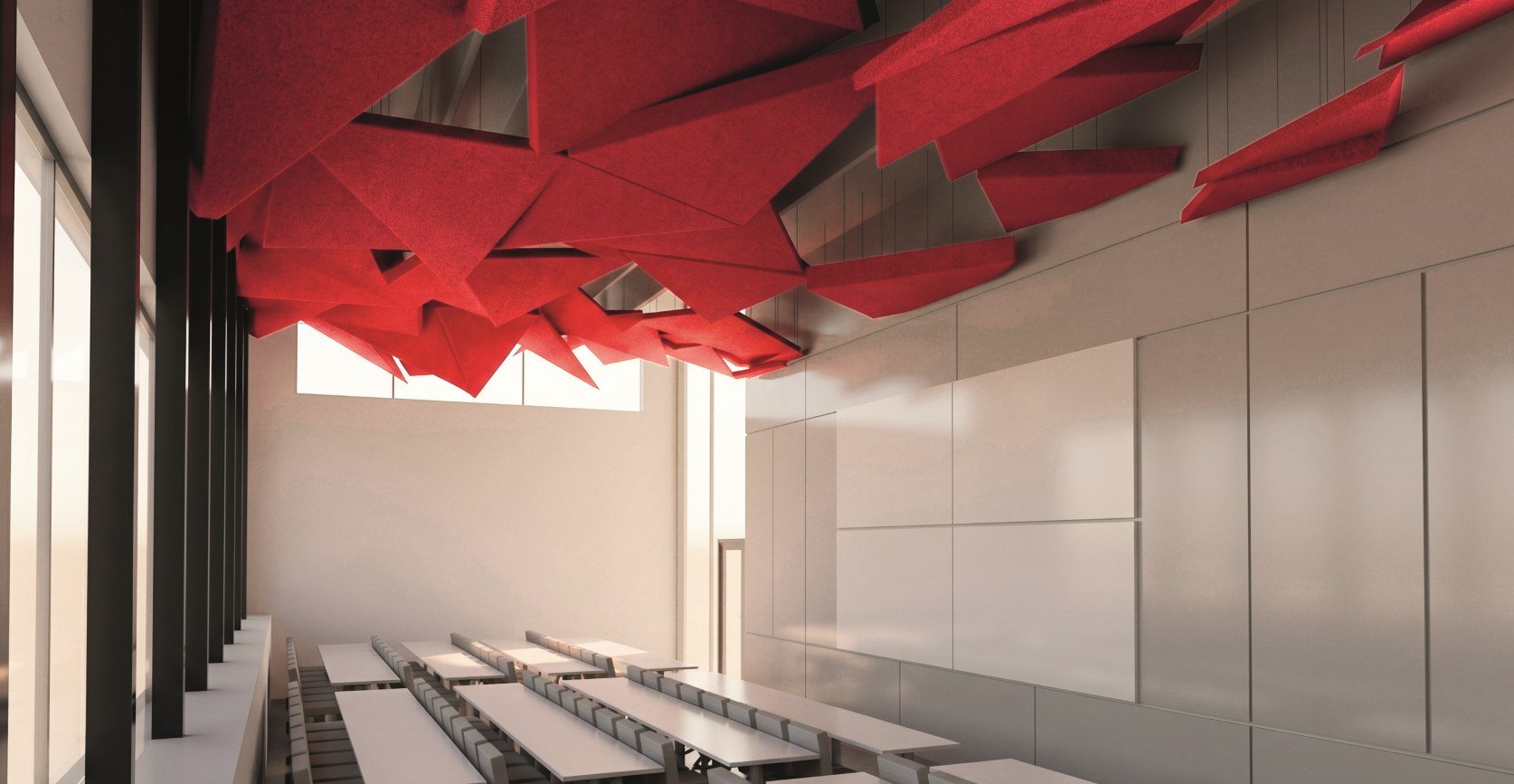
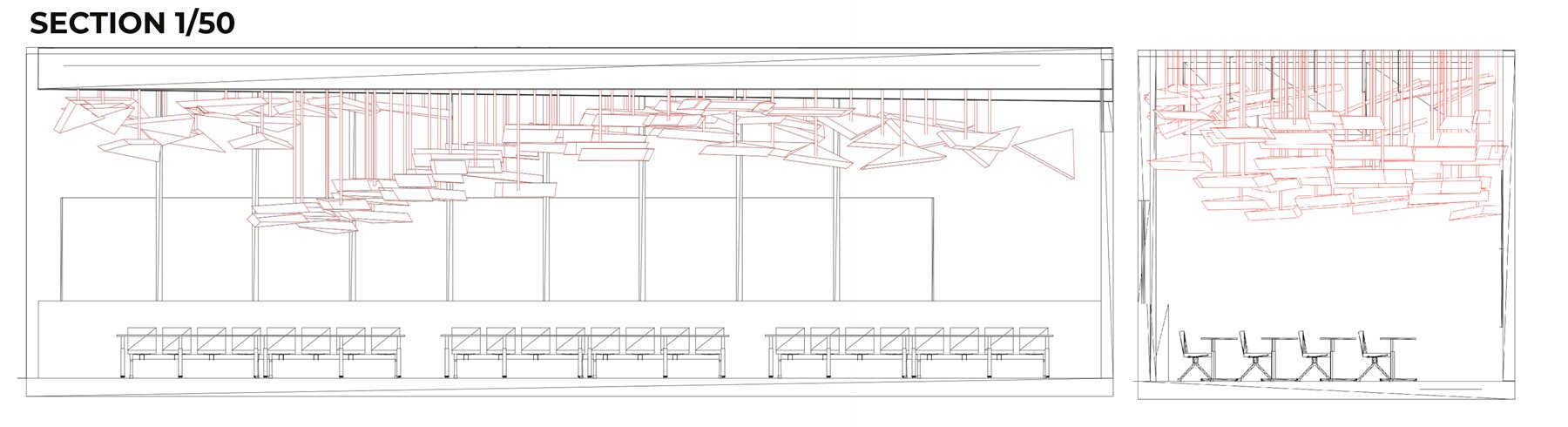
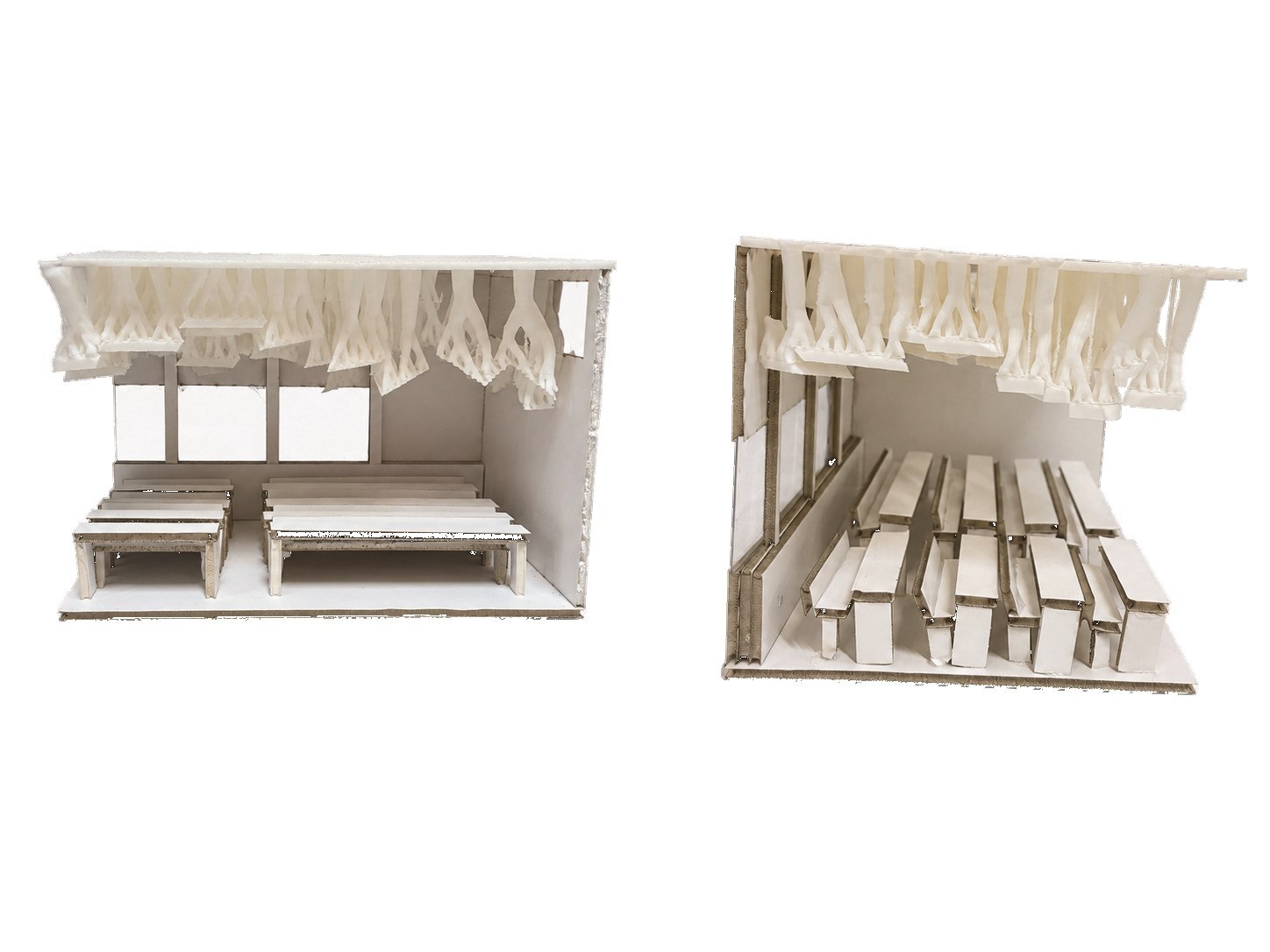
A multi-angled, triangulated ceiling that diffuses sound where it is needed and absorbs it near the source, tested in sections and a 1:50 physical model.

Moving through the room
A perspective walk-through of the ceiling system.
Final boards
The final term project boards of Delta Acoustics.